

Key Takeaways
- Duplex steel flanges combine mechanical strength and corrosion resistance for demanding industrial applications.
- Understanding ASTM and ASME standards simplifies the specification of duplex steel flanges for buyers.
- ASTM A182 is crucial for specifying material requirements for duplex steel flanges.
- ASME B16.5 outlines dimensional and pressure-temperature requirements for flanged connections.
- Choosing the right duplex or super duplex grade requires consideration of environmental conditions and engineering specifications.
Kalp Alloys is a Leading Manufacturer of Duplex and Super Duplex Steel Flanges.
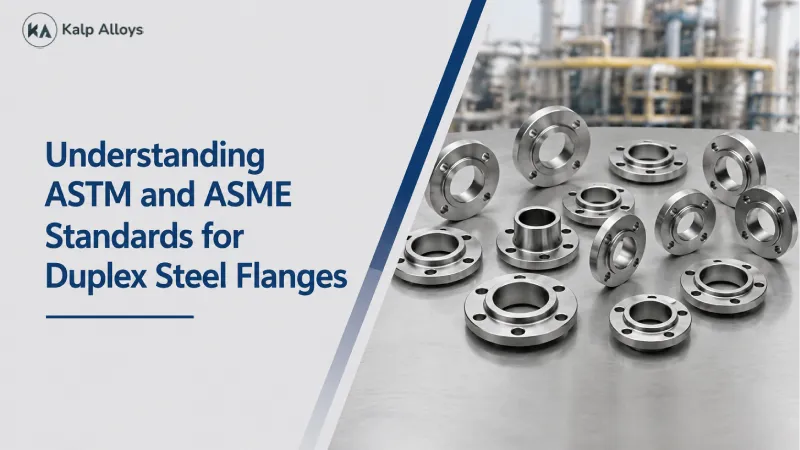
Duplex steel flanges are selected for applications where mechanical strength and corrosion resistance need to work together. They are often associated with demanding environments such as offshore systems, chemical processing, desalination, oil and gas, and other industrial piping services.
But picking the content is just one aspect of the work. The flange must also meet the applicable dimensional, pressure, material, testing, and documentation requirements. This is where ASTM and ASME standards become important.
For buyers, understanding what each standard does can make specification and procurement much clearer.
ASTM and ASME Do Different Jobs
ASTM material specifications primarily define requirements for materials and products. ASME piping standards commonly define dimensions, pressure-temperature ratings, component configurations, and related requirements.
For example, ASTM A182/A182M covers forged or rolled alloy and stainless steel pipe flanges, fittings, valves, and parts for high-temperature service. Its current 2026 edition is ASTM A182/A182M-26.
ASME B16.5 addresses pipe flanges and flanged fittings, including pressure-temperature ratings, materials, dimensions, tolerances, marking, testing, and openings.
As a result, rather than being interchangeable, the two are complementary.
ASTM A182 and Duplex Flanges
ASTM A182 is an important specification for forged or rolled alloy and stainless steel flange materials.
When a project specifies an ASTM material grade, the manufacturer must work to the relevant chemistry, mechanical, heat-treatment, and testing requirements associated with that grade.
For duplex stainless steel, material selection is especially important because duplex grades rely on a controlled balance of ferritic and austenitic phases.
ASTM specifications covering duplex materials emphasize appropriate composition, mechanical performance, and heat treatment. For pressure-containing duplex castings, ASTM A995/A995M covers austenitic-ferritic duplex stainless steel castings for flanges, fittings, valves, and related parts.
The specific product form and project specification determine which ASTM standard applies.
What Does ASME B16.5 Cover?
ASME B16.5 provides the dimensional and rating framework used for many industrial flanged connections.
The 2025 edition applies to NPS 1/2 through NPS 24 and includes pressure classes 150, 300, 400, 600, 900, and 1500, as well as Class 2500 within specified size limits.
It also covers requirements relating to:
- Pressure-temperature ratings
- Flange dimensions
- Tolerances
- Materials
- Marking
- Testing
- Bolt holes and openings
- Bolting
- Gaskets and flange joints
For larger diameters, ASME B16.47 covers large-diameter steel flanges from NPS 26 through NPS 60.
Duplex vs Super Duplex
Duplex and super duplex should not be treated as identical materials.
Duplex grades such as UNS S31803 and S32205 offer a combination of strength and corrosion resistance. Super duplex grades such as UNS S32750 and S32760 are designed for more demanding corrosion environments and higher alloying levels.
The actual grade must be selected according to the fluid, temperature, chloride exposure, mechanical loads, and applicable engineering specification.
This is why a knowledgeable Duplex Steel Flanges Manufacturer should review the complete application before finalizing the material.
Where Are Duplex Flanges Used?
Duplex and super duplex flanges are commonly considered for:
- Offshore and marine systems
- Oil and gas facilities
- Chemical processing
- Desalination systems
- Petrochemical plants
- Power and process systems
- Corrosive fluid piping
The material choice depends on the actual conditions. No flange grade should be selected simply because an industry generally uses duplex steel.
What Should Buyers Specify?
When you buy duplex steel flanges, provide complete information from the beginning.
Important details include:
- Duplex or super duplex grade
- Flange type
- Nominal size
- Pressure class
- Facing
- Bore
- Applicable ASTM specification
- Applicable ASME dimensional standard
- Testing and inspection
- Material certification
- Heat-treatment requirements
For international purchases, a Duplex Steel Flanges Exporter should also understand packing and documentation requirements for the destination market.
Why Choose Us
At Kalp Alloys, we have been dealing in duplex and super duplex materials for piping needs in industries. The list of flanges published by us comprises of duplex and super duplex along with stainless steel, carbon steel, alloy steel, titanium and nickel alloys. We concentrate on learning about the necessary grade, flange type, size, class and standard before sending out details about products. We are a Duplex Steel Flanges Manufacturer and a Duplex Steel Flanges Exporter which means that our first concern is specifications while the second one is catering to the needs of customers regarding industrial requirements.
Conclusion
ASTM and ASME standards have different yet interrelated purposes when it comes to specifying duplex steel flanges. ASTM standards define the specifications concerning material composition, mechanical properties, heat treatment, and relevant product specifications while ASME B16.5 gives dimensions and pressure-temperature specifications for flanges and flange fittings. It is important to choose duplex and super duplex grades based on actual environment conditions and not based solely on material designation. Prior to ordering, it is necessary to determine grade, size, class, facing, standard, testing, and documentation. A good Super Duplex Steel Flanges Manufacturer will assist in converting those technical specifications into an adequate product specification.
Need duplex or super duplex flanges for offshore, oil and gas, chemical, or industrial piping? Contact Kalp Alloys at +91 8160873937 or email sales@kalpalloys.com for product information and enquiries.
Frequently Asked Questions
What are duplex steel flanges?
Duplex steel flanges are components made from a stainless steel that combines both ferritic and austenitic properties, offering high strength and excellent corrosion resistance. They are commonly used in demanding applications such as offshore systems and chemical processing.
How do ASTM and ASME standards relate to duplex steel flanges?
ASTM standards specify the material properties and specifications for duplex steel flanges, while ASME standards provide the dimensional and pressure-temperature requirements for their application. Together, these standards ensure that the flanges meet the necessary performance criteria.
What specifications should I provide when ordering from a duplex steel flanges manufacturer?
When ordering duplex steel flanges, you should specify the duplex or super duplex grade, flange type, nominal size, pressure class, facing, bore, and relevant ASTM and ASME standards. Material certification and heat-treatment requirements are also critical for ensuring compliance.
Where are duplex flanges typically used?
Duplex flanges are widely used in applications such as offshore and marine systems, oil and gas facilities, chemical processing, desalination plants, and petrochemical plants. Their selection is based on specific environmental conditions and operational requirements.
Why is it important to choose the right duplex steel flanges manufacturer?
Selecting the right duplex steel flanges manufacturer is critical to ensuring that the produced components meet the required specifications, quality standards, and performance criteria. A knowledgeable manufacturer will assess your application needs and help you choose the appropriate grades and materials.