

Key Takeaways
- Alloy steel flanges are essential for high-pressure piping applications due to their strength and suitability.
- Choosing the right alloy grade improves performance in demanding service environments like power plants.
- Follow ASTM A182/A182M specifications for mechanical properties and heat treatment in alloy steel flanges.
- As a leading Alloy Steel Flanges Manufacturer, Kalp Alloys emphasizes proper selection based on application requirements.
- Consider factors like pressure class, temperature, and flange type before purchasing alloy steel flanges.
Kalp Alloys is a Leading Manufacturer of Alloy Steel Flanges.
High-pressure piping leaves little room for an unsuitable connection component. The pipe, flange, gasket, bolting, valve, and equipment connection all need to be compatible with the design conditions. When operating pressure and temperature rise, material selection becomes even more important.
Alloy steel flanges are used for applications where specific alloying elements and mechanical properties make the material appropriate for demanding service. ASTM A182/A182M covers forged or rolled alloy and stainless steel pipe flanges, fittings, valves, and parts for high-temperature service.
The key is not simply choosing alloy steel. It is choosing the correct alloy grade and flange specification for the actual system.
Why Alloy Steel Is Considered for Demanding Piping
Alloy steel contains deliberate additions of elements such as chromium and molybdenum. Depending on the grade, these additions can influence strength, hardenability, and performance at elevated temperatures.
This makes alloy steel relevant to power generation, refineries, petrochemical plants, boilers, steam systems, and other high-temperature applications.
For high-pressure piping, the flange must also be properly rated. Pressure capability is not determined by material alone. Flange class, temperature, dimensions, design code, gasket, bolting, and the connected piping system all matter.
ASTM A182 for Alloy Steel Flanges
ASTM A182/A182M is an important material specification for forged or rolled alloy and stainless steel components.
The current ASTM A182/A182M-26 covers forged or rolled alloy and stainless steel pipe flanges, forged fittings, valves, and parts for high-temperature service.
Using the correct ASTM material designation helps establish the required chemistry, heat treatment, and mechanical properties associated with the selected grade.
A buyer should therefore specify the exact grade rather than simply requesting an “alloy steel flange.”
ASME B16.5 and Pressure Classes
ASME B16.5 is widely used for the dimensional and rating requirements of pipe flanges and flanged fittings.
The 2025 edition covers NPS 1/2 through NPS 24 and pressure classes including 150, 300, 400, 600, 900, and 1500, plus selected Class 2500 sizes.
The standard addresses:
- Pressure-temperature ratings
- Flange dimensions
- Tolerances
- Material requirements
- Marking
- Testing
- Openings
- Bolting
- Gaskets and flange joints
For larger diameters, ASME B16.47 covers large-diameter steel flanges from NPS 26 through NPS 60.
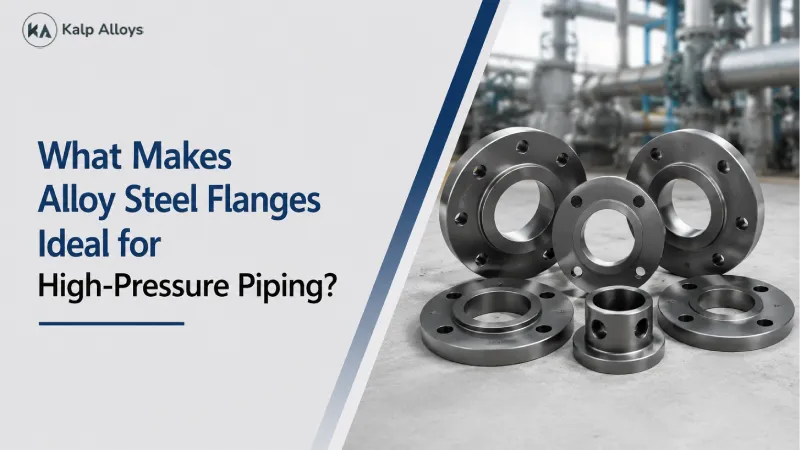
Flange Types for High-Pressure Services
Welding Neck Flanges
Welding neck flanges are frequently considered for high-pressure and high-temperature services because they connect through a butt weld and provide a gradual transition.
Blind Flanges
Blind flanges are used to close piping ends or equipment nozzles. They are useful where a line may need to be isolated or opened during maintenance.
Socket Weld Flanges
These are typically used for smaller piping where socket welding is specified by the design.
Slip-On Flanges
Slip-on flanges fit over the pipe and are welded into position. Their suitability depends on the project specification and service.
The correct flange type depends on the piping design, not simply the pressure class.
Where Alloy Steel Flanges Are Used
A suitable Alloy Steel Flanges Manufacturer may supply products for applications such as:
- Power plants
- Boiler piping
- Steam systems
- Refineries
- Petrochemical plants
- Heat-processing systems
- High-temperature industrial lines
- Process piping
The precise material grade and flange class must be confirmed according to operating conditions.
What Makes Proper Selection Important?
When dealing with high-pressure systems, buyers should consider the complete connection rather than the flange in isolation.
Before you buy alloy steel flanges, review:
- Alloy grade
- Nominal pipe size
- Pressure class
- Operating temperature
- Flange type
- Facing
- Applicable ASTM standard
- Applicable ASME standard
- Testing and inspection requirements
- Material certificates and traceability
This information helps a supplier provide a product that corresponds with the piping design.
Why Choose Us
Kalp Alloys provides alloy steel flanges and other pipe fittings material to cater to industrial as well as engineering purposes. The wider range includes carbon steel, stainless steel, duplex, super duplex, titanium, nickel alloys, aluminum, and other industrial material. For enquiring about flanges, we deal with the technical aspect of the enquiry such as grade, size, class, type, facing, relevant standards, and documents. As an Alloy Steel Flanges Manufacturer, we concentrate on specification-based deliveries, and being an Alloy Steel Flanges Exporter helps our clients in international business.
Conclusion
The use of alloy steel flanges is evaluated in piping systems where specific alloy grades offer qualities that would be required by piping systems operating at high temperatures and pressures. ASTM A182/A182M offers the standards for materials used in forging and rolling of alloy and stainless-steel flanges, while ASME B16.5 offers critical dimensions, ratings, markings, and testing specifications in many flange applications. But the flange performance depends on the entire piping system. Purchasing of the flanges requires proper evaluation of grade, pressure class, temperature, flange type, facing, bolting, gasket, testing, and documentation. Working with a good Alloy Steel Flanges Exporter could help.
Need alloy steel flanges for high-pressure piping, power, refinery, or petrochemical applications? Contact Kalp Alloys at +91 8160873937 or email sales@kalpalloys.com for product information and enquiries.
Frequently Asked Questions
What are the benefits of using alloy steel flanges in high-pressure piping?
Alloy steel flanges offer enhanced strength, durability, and resistance to high temperatures, making them ideal for demanding applications such as power generation and petrochemical plants. The specific alloying elements like chromium and molybdenum enhance their mechanical properties, ensuring reliable performance under high pressure.
Why should I choose a reputable alloy steel flanges manufacturer?
Choosing a reputable alloy steel flanges manufacturer ensures that you receive high-quality products that meet required standards such as ASTM A182/A182M. A reliable manufacturer will also provide proper documentation and traceability, which are crucial for compliance in high-pressure applications.
What factors should I consider when selecting alloy steel flanges for my project?
When selecting alloy steel flanges, you should consider the alloy grade, nominal pipe size, pressure class, operating temperature, flange type, and applicable standards. Each of these factors plays a critical role in ensuring the safety and efficiency of the piping system.
How does ASTM A182/A182M relate to alloy steel flanges?
ASTM A182/A182M is the specification that governs forged or rolled alloy and stainless steel flanges used in high-temperature service. This standard helps establish the required chemistry, mechanical properties, and heat treatment for the selected grade, ensuring proper performance in your application.
What types of alloy steel flanges are suitable for high-pressure services?
For high-pressure services, welding neck flanges, blind flanges, socket weld flanges, and slip-on flanges are commonly used. The choice of flange type depends on the specific requirements of the piping design and the operating conditions.