

Key Takeaways
- Duplex steel pipes combine ferrite and austenite phases for enhanced strength and corrosion resistance in applications.
- Understanding duplex steel grades is crucial for selecting the right material for specific industrial needs.
- ASTM A790 and A789 standards differentiate between pipes and tubes, impacting procurement decisions.
- Kalp Alloys specializes in high-quality duplex steel pipes and tubes tailored for various applications.
- Duplex steel pipes combine mechanical strength with corrosion resistance, suitable for demanding industrial applications.
Kalp Alloys is a leading manufacturer and exporter of aluminum tubes for industrial and engineering applications.
An aluminum tube can meet the required dimensions and still be unsuitable for its intended application. Material temper, production method and dimensional tolerances can make a significant difference during fabrication and assembly. As an Aluminum Tubes Manufacturer, we help procurement teams understand these requirements before finalising their enquiries.
Kalp Alloys is a leading manufacturer and exporter of duplex and super duplex steel pipes and tubes for industrial applications.
A pipeline handling seawater faces different material challenges from one carrying industrial chemicals. Fluid composition, temperature and pressure all influence which stainless steel grade is appropriate. As a Duplex Steel Pipes Manufacturer, we help buyers identify these requirements before selecting materials for their projects. Understanding duplex grades, their properties and relevant ASTM standards is the starting point for informed procurement.
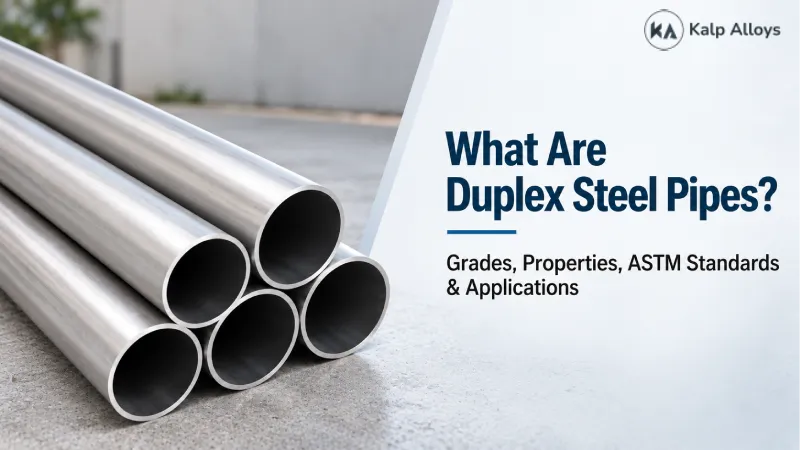
What Are Duplex Steel Pipes?
Duplex steel pipes are produced from stainless steel containing two metallurgical phases: ferrite and austenite. This structure gives duplex alloys a combination of mechanical strength and corrosion-resistant characteristics.
Compared with common austenitic stainless steels, duplex grades generally provide higher yield strength and improved resistance to chloride-induced stress corrosion cracking in many environments.
However, duplex stainless steel is not resistant to every chemical or operating condition.
Specifying the correct UNS grade is more important than simply requesting duplex stainless steel.
Duplex and Super Duplex Steel Grades Explained
Different duplex grades contain different proportions of chromium, nickel, molybdenum and nitrogen. These variations influence strength and resistance to localized corrosion.
| Steel Grade | UNS Designation | Material Characteristic | Application Consideration |
|---|---|---|---|
| Lean Duplex 2101 | S32101 | High strength with reduced nickel content | Structural and selected water-handling systems |
| Duplex 2205 | S31803 / S32205 | Good strength and chloride corrosion resistance | Chemical and process piping |
| Super Duplex 2507 | S32750 | Higher resistance to localized chloride corrosion | Seawater and offshore equipment |
| Super Duplex S32760 | S32760 | High-alloy composition with added copper and tungsten | Selected marine and chemical applications |
Duplex 2205 is frequently evaluated for industrial process lines. Super duplex grades become relevant when the approved design requires greater resistance to aggressive chloride conditions.
As a Super Duplex Steel Pipes Manufacturer, we recommend comparing actual service requirements rather than treating a higher-alloy grade as an automatic upgrade.
Key Properties of Duplex Steel Pipes and Tubes
Duplex stainless steel offers a combination of characteristics that can be useful in demanding piping applications.
- Mechanical strength: Higher yield strength than common 304L and 316L stainless steels may support particular engineering designs.
- Localized corrosion resistance: Chromium, molybdenum and nitrogen contribute to resistance against pitting and crevice corrosion.
- Stress corrosion cracking resistance: Duplex microstructures can improve performance in various chloride-containing environments.
- Weldability: Suitable welding procedures and controlled thermal conditions are necessary to maintain the required material properties.
An important limitation is prolonged exposure to elevated temperatures, which can cause undesirable metallurgical changes.
ASTM A790 vs ASTM A789: Which Standard Applies?
The distinction between pipe and tube specifications matters during industrial purchasing.
ASTM A790/A790M addresses seamless and straight-seam welded ferritic/austenitic stainless steel pipes intended for general corrosive service.
ASTM A789/A789M applies to seamless and welded ferritic/austenitic stainless steel tubing for general service.
Although both cover duplex materials, they involve different product requirements.
A Duplex Steel Tubes Manufacturer needs to understand whether the purchaser requires tubing identified by outside diameter and wall thickness or piping specified through nominal pipe size and schedule.
We recommend mentioning the exact ASTM specification and its applicable edition in technical enquiries.
Where Are Duplex and Super Duplex Pipes Used?
Duplex stainless steel is considered in industries where fluid chemistry and mechanical loading create demanding material requirements.
Chemical processing facilities use selected duplex grades in process lines that handle compatible fluids. Oil and gas projects may require duplex piping for particular production and processing services.
Water-treatment facilities and desalination equipment also represent important application areas, especially where chloride exposure influences material selection.
As a Duplex Steel Pipes Exporter, we work with industrial requirements involving different material grades and product dimensions.
For more aggressive marine environments, a Super Duplex Steel Pipes Exporter may receive enquiries specifying S32750 or S32760.
Heat-transfer equipment can also require specialised duplex tubing. A Super Duplex Steel Tubes Manufacturer should review the equipment specification, operating medium and dimensional requirements before confirming material suitability.
What Should Buyers Check Before Ordering?
A complete technical enquiry helps distinguish the required product from materials that may look similar but have different properties.
Before submitting an RFQ, buyers should verify:
- Required UNS designation, such as S32205 or S32750
- Applicable ASTM A790 or ASTM A789 specification
- Seamless or welded construction
- Outside diameter, wall thickness or pipe schedule
- Required length, quantity and end preparation
- Operating temperature, pressure and process medium
- Material certification and inspection requirements
As a Duplex Steel Tubes Exporter, we encourage buyers to attach technical drawings when special tolerances or project-specific dimensions are involved.
Material Documentation and Inspection
At Kalp Alloys, we support enquiries where material identification and technical documentation form part of the purchasing requirements.
Our duplex and super duplex pipe and tube offering includes EN 10204 3.1 material test certification, with 3.2 certification available on request. Third-party inspection can also be arranged according to project requirements.
We recommend identifying the required certificates, traceability details and supplementary tests before order confirmation rather than after material preparation.
Why Choose Us?
At Kalp Alloys, we focus on supplying duplex and super duplex steel pipes and tubes for clearly defined industrial requirements. Our team reviews customer specifications covering material grades, manufacturing methods, dimensions and inspection documentation. As a Super Duplex Steel Tubes Exporter, we support international purchasing requirements where product identification and material traceability matter. We work with procurement teams and project buyers to clarify technical details, certification expectations and delivery requirements before preparing quotations.
Conclusion
Duplex steel pipes offer material characteristics that make them relevant to industrial systems requiring strength and resistance to particular corrosive conditions. Duplex 2205, Super Duplex 2507 and S32760 differ in composition and suitability, making grade identification an essential purchasing decision.
ASTM A790 and ASTM A789 establish separate requirements for pipes and tubes, while temperature, pressure, fluid chemistry and fabrication conditions influence material selection.
At Kalp Alloys, we believe effective procurement begins with an accurate technical specification. The appropriate duplex grade is the one that meets the approved engineering requirements, not simply the one with the highest alloy content.
Looking for duplex or super duplex steel pipes and tubes for your industrial project? Share your required material grade, ASTM standard, dimensions, manufacturing type and quantity with our sales team to request a quotation. Call us: +91 81608 73937
Email: sales@kalpalloys.com
Contact our team today to discuss your duplex and super duplex piping requirements.
Frequently Asked Questions
What are the primary benefits of using duplex steel pipes?
Duplex steel pipes provide a superior combination of mechanical strength and corrosion resistance compared to traditional austenitic stainless steels. This makes them ideal for applications in aggressive environments, such as chemical processing and seawater applications.
Which ASTM standards apply to duplex steel pipes?
The ASTM A790 standard applies to seamless and straight-seam welded ferritic/austenitic stainless steel pipes, while ASTM A789 pertains to seamless and welded stainless steel tubing. Understanding these standards is crucial for selecting the right product for your needs.
How do I choose the right duplex steel pipes for my project?
When selecting duplex steel pipes, it is essential to verify the required UNS designation, applicable ASTM specifications, and the desired construction type. Additionally, factors such as operating temperature, pressure, fluid chemistry, and needed dimensions should be considered.
What applications commonly use duplex steel pipes?
Duplex steel pipes are widely utilized in chemical processing, oil and gas industries, water treatment facilities, and marine applications. Their durability and resistance to stress corrosion cracking make them suitable for handling various aggressive fluids.
What makes Kalp Alloys a reliable duplex steel pipes manufacturer?
Kalp Alloys is recognized for its commitment to quality and technical specifications in the production of duplex and super duplex steel pipes. We provide material certifications, support various industrial requirements, and ensure accurate product identification and traceability.