

Key Takeaways
- Titanium flanges offer unmatched corrosion resistance and long service life
- Choosing the correct grade is critical for performance and safety
- They are widely used in marine, chemical, and aerospace industries
- Standards like DIN, ASTM, and BS ensure quality and reliability
- Partnering with a trusted Titanium Flanges Manufacturer reduces long-term risks
What Are Titanium Flanges and Why Do They Matter?
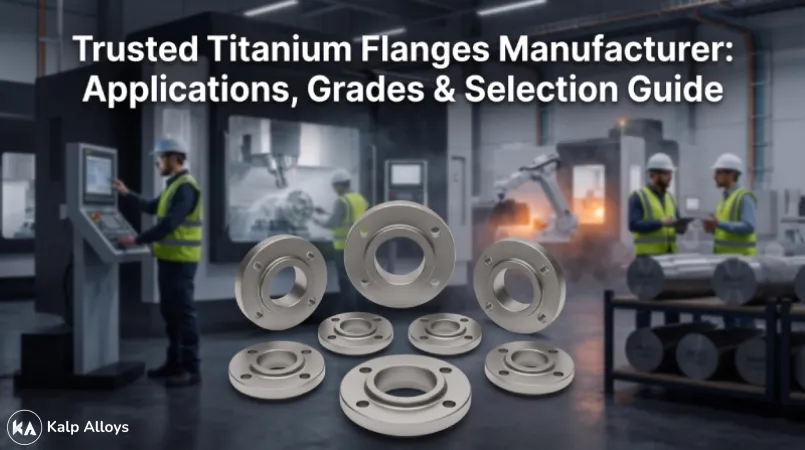
Flanges made of titanium are specially designed for joining various parts of pipe fittings, valves, pumps, and other machinery. Sounds quite simple. Not really. The material itself gives it all a twist. For one thing, titanium is exceptionally tough and light at the same time. But perhaps more crucially, it offers outstanding resistance to corrosion and hardly suffers from any environmental effects in conditions when stainless steel fails to perform. Here comes the value of titanium: unlike most materials, it never shows unexpected behavior or wears out after a while.Key Features of Titanium Flanges
There’s a reason industry don’t hesitate to invest in titanium, even though it costs more upfront.- Exceptional Corrosion Resistance
- High Strength-to-Weight Ratio
- Long Service Life
- Resistance to Extreme Conditions
- Rust-Free Surface
Titanium Flange Grades Explained
Not all titanium flanges are the same. One of the most frequent and expensive errors is selecting the incorrect grade. Grade 2 (Gr2) This is commercially pure titanium. It offers excellent corrosion resistance and moderate strength, making it ideal for chemical processing and marine applications. Grade 5 (Gr5) An alloy of titanium with aluminium and vanadium. It’s significantly stronger than Grade 2 and is widely used in aerospace and high-performance applications. Grade 7 (Gr7) This grade includes palladium, which enhances corrosion resistance even further. It’s particularly useful in highly aggressive chemical environments. Grade 9 (Gr9) A balanced option offering good strength, formability, and corrosion resistance. Often used in lightweight structures and industrial applications. If you’re unsure which grade to pick, don’t guess. It’s always better to consult a trusted Titanium Flanges Manufacturer rather than risking compatibility issues later. Manufacturing Standards You Should Look For Quality isn’t just about the material — it’s about how it’s processed and standardised. Kalp Alloys manufactures titanium flanges following globally recognised standards such as:- DIN
- ASTM
- BS
Applications of Titanium Flanges
Titanium flanges are not niche products anymore. They’re used across industries where failure simply isn’t an option.- Chemical Processing Plants
- Marine Industry
- Aerospace Industry
- Motorsports and Bicycles
- Industrial Piping Systems
How to Choose the Right Titanium Flanges
Let’s be honest — most buyers either overcomplicate this or oversimplify it. Both are bad. Here’s what actually matters:- Understand Your Application
- Check the Grade Carefully
- Look at Standards Compliance
- Customisation Requirements
- Supplier Reliability
Why Choose Kalp Alloys
Supplier choice shouldn’t be guided solely by cost since price alone will likely lead to failure in the project. The important aspects are reliability, technical knowledge, and provision of precise items to fit a particular system. Kalp Alloys has built its reputation as a reliable provider of Titanium Flanges by concentrating on performance and not only supplying products. Kalp Alloys’ titanium flanges are produced through the use of superior qualities such as Gr2, Gr5, Gr7, and Gr9. They also meet international standards such as DIN, ASTM, and BS. This aspect makes one more certain that the parts purchased will easily fit into the system and serve well. In case there is need for customization of the parts, Kalp Alloys can do this professionally, and at reasonable prices too. In addition to this, all parts can be used in marine, aerospace, and chemical applications. All this combined with the quality service offered makes purchasing titanium flanges easy and safe.Conclusion
The use of titanium flanges is no less than a commitment because of the benefits associated with such flanges, which none of the other metals offer. The exceptional resistance to corrosion and the lightweight strength are just some of the many things that come with choosing the best type of flange from an ideal Titanium Flanges Manufacturer. When you choose the services of Kalp Alloys, the best option when it comes to purchasing titanium flanges, you ensure that the product chosen is going to meet international standards. If you are wondering where to Buy Titanium Flanges, this should be your first choice. This is mainly because the manufacturer is known to offer the best range of titanium flanges in order to help meet the unique needs of clients across various sectors, such as marine, chemical, and aerospace. Ready to upgrade with premium Titanium Flanges built for extreme performance? Call +91 8160873937 or email sales@kalpalloys.com for expert guidance and fast quotes from a trusted Titanium Flanges Manufacturer. [sp_easyaccordion id="3264"]Summarize with AI: