

Key Takeaways
- Understand different stainless steel pipe grades and their applications for better material selection.
- Kalp Alloys is a leading stainless steel pipes manufacturer offering a wide range of products.
- Learn the differences between seamless, ERW, and welded stainless steel pipes for your specific needs.
- Corrosion resistance and durability make stainless steel pipes ideal for various industrial applications.
- Key factors to consider before buying stainless steel pipes include specifications, standards, and testing requirements.
Kalp Alloys is a Leading Manufacturer of Stainless Steel Pipes and Tubes.
When an industrial piping system has to deal with moisture, chemicals, temperature changes, pressure, or demanding operating conditions, material selection matters. Stainless steel pipes are widely chosen for applications where corrosion resistance, durability, cleanliness, and dependable service are important.
However, stainless steel is not a single substance. Different grades, manufacturing forms, dimensions, and specifications are available for different requirements. Choosing the right option starts with understanding these differences.
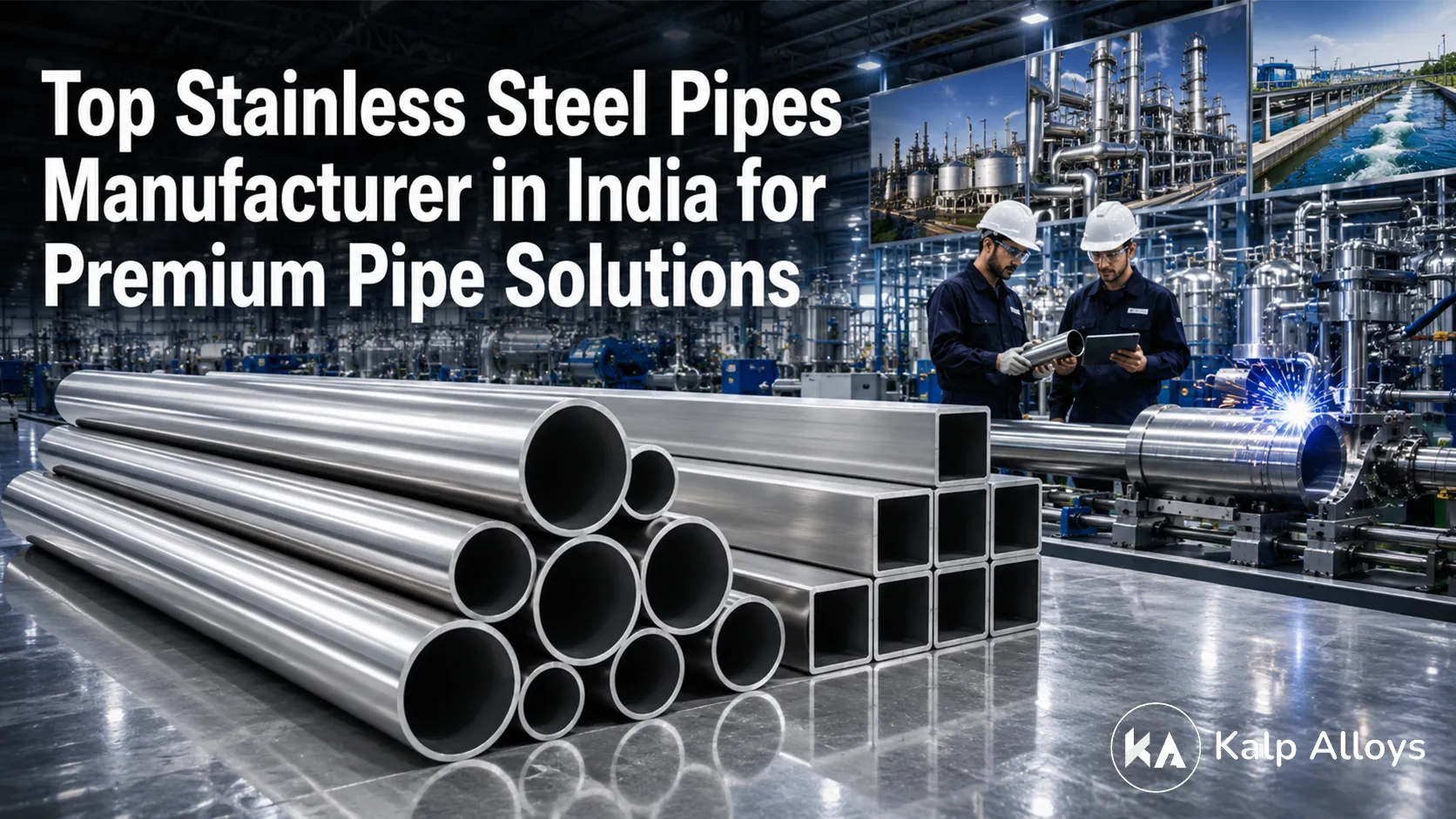
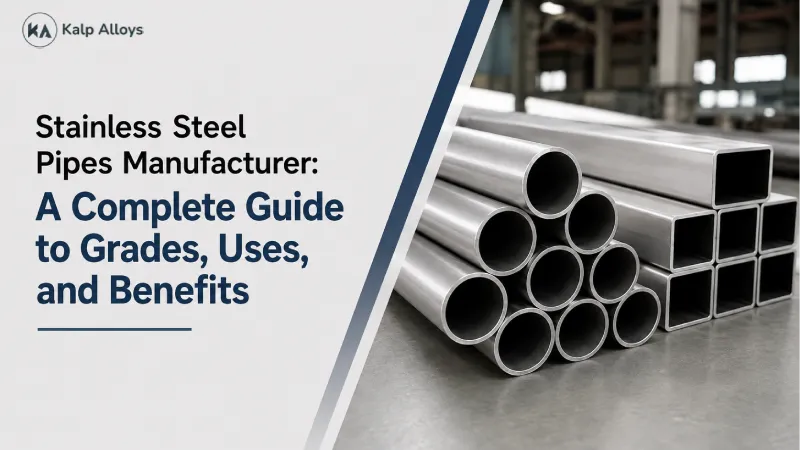
As an experienced Stainless Steel Pipes Manufacturer, Kalp Alloys supplies stainless steel and duplex steel pipes and tubes in seamless, ERW, and welded forms for a range of industrial applications. Its listed range covers 15 NB to 1200 NB and SCH 5S to XXS, subject to product specifications.
Understanding Stainless Steel Pipe Grades
Grade selection is one of the first things to consider when sourcing stainless steel pipes. The appropriate grade depends on the operating environment, corrosion exposure, temperature, mechanical requirements, and applicable project specification.
Some commonly supplied grades include:
- SS 304 and 304L: Popular general-purpose grades used across many industrial applications.
- SS 316 and 316L: Commonly selected where greater corrosion resistance is required, including certain chemical and marine environments.
- SS 321 and 321H: Used for applications involving elevated temperatures.
- SS 310S and 310H: Suitable for certain high-temperature environments.
- SS 317 and 317L: Used where enhanced corrosion resistance is required.
- SS 904L: A high-alloy option used for demanding corrosion conditions.
Kalp Alloys lists grades including 304, 304L, 304H, 316, 316L-related grades, 321, 347, 904L, and several duplex and super duplex grades.
ASTM A312, for example, covers seamless, welded, and heavily cold-worked austenitic stainless steel pipe, while ASME B36.19M addresses standardized dimensions for welded and seamless stainless steel pipe.
Seamless, ERW, or Welded: Which One?
Stainless steel pipes are available in different manufacturing forms, and the correct choice depends on the application and specification.
Seamless pipes are produced without a welded longitudinal seam and are commonly considered for applications with demanding pressure or service requirements.
ERW pipes are manufactured using electric resistance welding and are used across a variety of industrial and general-service applications.
Welded pipes can be produced in different manufacturing methods and are selected according to dimensions, application, material specification, and project requirements.
A professional Stainless Steel Tubes Manufacturer should be able to explain these options instead of treating every application in the same way.
Where Are Stainless Steel Pipes Used?
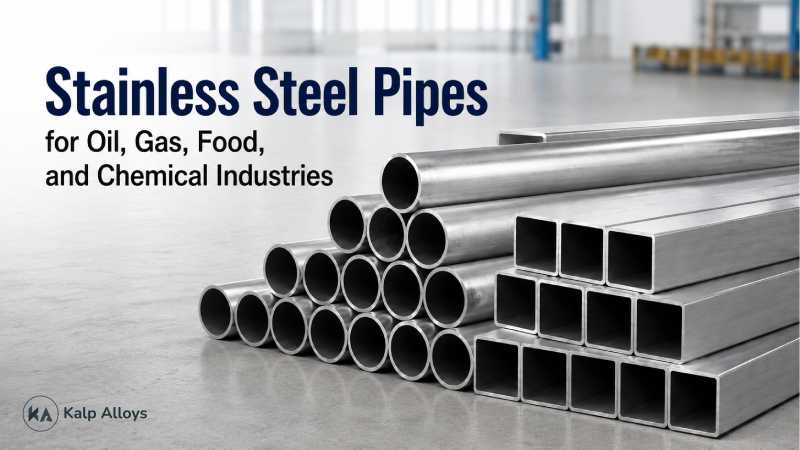
The combination of corrosion resistance, strength, and hygienic characteristics makes stainless steel suitable for many industries.
Common applications include:
- Chemical processing: Piping systems exposed to demanding process environments.
- Food processing: Applications where cleanable and corrosion-resistant materials are important.
- Oil and gas: Selected piping systems and process applications according to project specifications.
- Power generation: Pipes and tubes used in various plant systems.
- Marine applications: Areas where moisture and chloride exposure can be significant.
- Pharmaceutical and hygienic processing: Applications where material cleanliness and corrosion resistance are important.
- Heat exchangers and industrial equipment: Tubes and piping selected according to temperature and process conditions.
The exact grade and pipe construction should always be selected according to the specific service conditions rather than the industry name alone.
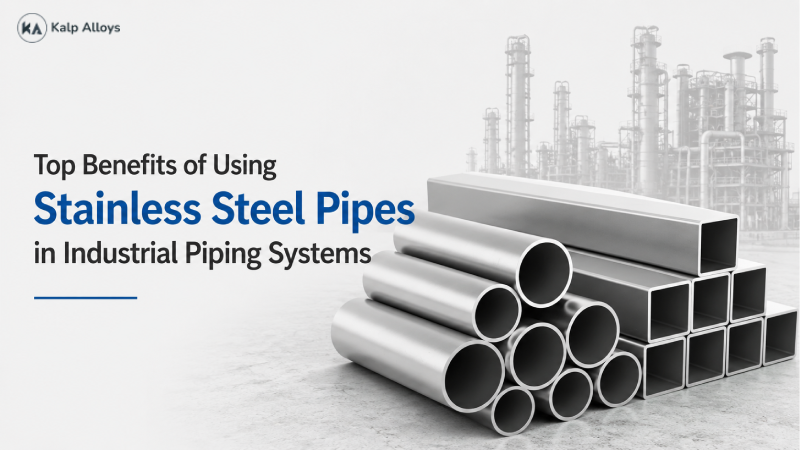
Key Benefits of Stainless Steel Pipes
Why do so many industries choose stainless steel?
Corrosion Resistance
The chromium content of stainless steel supports the formation of a passive oxide layer that provides corrosion resistance. The actual resistance depends on the grade and surrounding conditions.
Long-Term Durability
Stainless steel can provide strong mechanical performance and resistance to demanding environments when the appropriate grade is selected.
Hygienic Surface
Stainless steel is widely used in food, pharmaceutical, and other applications where clean surfaces and resistance to corrosion are important.
Wide Grade Selection
From common austenitic grades such as 304 and 316 to higher-alloy and duplex options, stainless steel provides flexibility for different service environments.
Versatile Manufacturing Options
Depending on the requirement, buyers can select seamless, ERW, or welded pipes and tubes in different dimensions and specifications.
What to Check Before You Buy Stainless Steel Pipes
Choosing a supplier should go beyond checking whether the required grade is listed. Before placing an order, review these points:
- Required grade and material specification
- Pipe or tube dimensions
- Wall thickness or schedule
- Seamless, ERW, or welded construction
- Applicable ASTM, ASME, API, or project standards
- Testing and inspection requirements
- Material certification and documentation
- Delivery and export requirements
This approach helps procurement teams communicate their requirements clearly with a Stainless-Steel Pipes Exporter and reduces the possibility of selecting an unsuitable product.
Why Choose Us
Our Stainless-Steel Tubes Exporter specializes in providing a variety of stainless steel pipes and duplex steel pipes. The range of products that we export comprises a number of different grades of stainless steel pipes with different sizes varying from 15 NB to 1200 NB and from SCH 5S to XXS, along with seamless, ERW and welded types. We make sure that our customers are clear about all the information regarding the type of stainless steel, dimensions, manufacturing form, applications, and documentation.
Conclusion
Various grades, sizes, and modes of manufacture of stainless-steel pipes have been made available, necessitating a proper choice for all industrial purposes. Whether it is 304 grade, 316 grade, or any other special type, such as those for high-temperature or corrosion resistance, there is always a need for a proper choice according to the requirements. Some of the factors that buyers may need to take into consideration include operating conditions, sizes, manufacturing modes, standards, testing, and certification. The choice of an experienced Stainless Steel Pipes Manufacturer will simplify this whole process by matching the needs of the project to the product.
Need the right stainless-steel grade and pipe specification for your project? Contact Kalp Alloys at +91 8160873937 or email sales@kalpalloys.com for product information and enquiries.
Frequently Asked Questions
What are the advantages of choosing stainless steel pipes for industrial applications?
Stainless steel pipes offer corrosion resistance, long-term durability, and hygienic surfaces, making them ideal for various industrial applications. Their flexibility in grade selection allows for tailored solutions depending on service environments.
How do I choose the right grade of stainless steel pipe?
Choosing the right grade of stainless steel pipe involves considering factors such as operating environment, corrosion exposure, and temperature requirements. Common grades include SS 304 for general purposes and SS 316 for environments requiring higher corrosion resistance.
What different forms do stainless steel pipes come in?
Stainless steel pipes are available in seamless, electric resistance welded (ERW), and welded forms. The choice among them depends on the specific application requirements and service conditions.
What is the importance of selecting a qualified stainless steel pipes manufacturer?
Choosing a qualified stainless steel pipes manufacturer like Kalp Alloys ensures you select the right material specification, grade, and construction method tailored to your project’s needs. Their expertise can guide you through the complexities of pipe selection.
Where can stainless steel pipes be used effectively?
Stainless steel pipes are utilized in a variety of industries, including chemical processing, food and beverage, oil and gas, and pharmaceuticals. Their properties make them suitable for demanding environments where corrosion resistance and cleanliness are critical.