

Key Takeaways
- Start by confirming the exact duplex steel grade required for your specific application.
- Evaluate a Duplex Steel Pipes Manufacturer's product capabilities including size and wall thickness.
- Testing and traceability are crucial; ensure the supplier provides comprehensive material test certificates.
- Inquire about third-party inspection availability before finalizing a Super Duplex Steel Tubes Exporter.
- Review chemical composition and mechanical testing standards to ensure compliance with your project specifications.
- Choose a supplier that connects the physical products to detailed testing and traceability records.
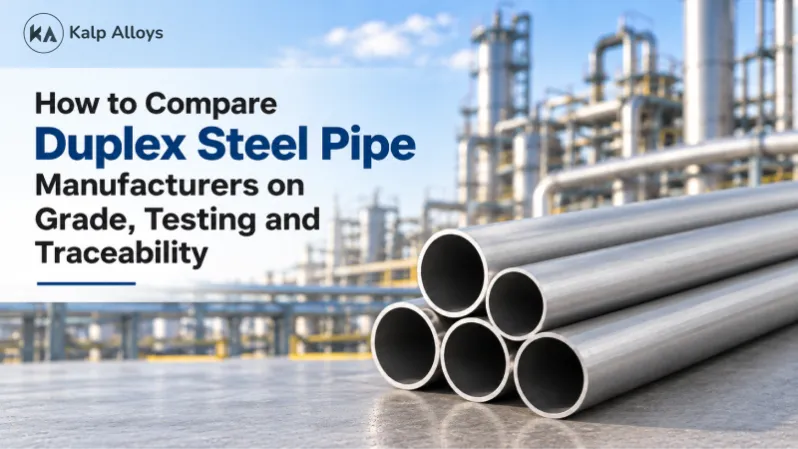
Kalp Alloys is a leading manufacturer and exporter of duplex and super duplex steel pipes and tubes. For critical industrial applications, selecting the right Duplex Steel Pipes Manufacturer requires more than checking product availability. Buyers need to compare the specified grade, manufacturing route, inspection requirements, documentation, and material traceability before placing an order.
A supplier that can clearly connect the finished pipe or tube with its material records, test results, and purchase specifications is easier to evaluate for demanding projects.
Start With the Required Duplex Steel Grade
The first comparison point should always be the material grade specified for your application. Duplex and super duplex stainless steels are not interchangeable simply because they belong to the same family.
Ask the supplier which exact grade is being offered and verify that it matches the purchase specification, applicable standard, dimensions, and service requirements.
For example, ASTM A790/A790M covers seamless and straight-seam welded ferritic/austenitic stainless-steel pipe, while ASTM A789/A789M covers seamless and welded ferritic/austenitic stainless steel tubing for general service. Their requirements include specified chemical composition and mechanical properties.
The grade written on the quotation should match the grade stated in your technical specification and purchase order.
Compare Duplex and Super Duplex Product Capability
A supplier's product range can tell you whether it regularly handles the type of material you require. Buyers may need standard duplex grades for one application and higher-alloy super duplex grades for another.
When comparing a Duplex Steel Pipes Manufacturer, check whether the supplier can provide the required product form, size range, wall thickness, manufacturing type, and applicable standard.
The same consideration applies when selecting a Duplex Steel Tubes Manufacturer. Tube specifications can have their own requirements for dimensions, heat treatment, mechanical testing, and nondestructive examination.
Check the Manufacturing Standard Carefully
A quality supplier should identify the applicable material and product standard rather than simply describing a pipe as “duplex steel.” ASTM A790/A790M, for instance, specifies requirements for seamless and straight-seam welded duplex stainless steel pipe, including chemical analysis, mechanical tests, and specified nondestructive or hydrostatic testing.
For tubing, ASTM A789/A789M specifies chemical composition, heat treatment, mechanical properties, and testing requirements such as tension, hardness, and applicable nondestructive electric or hydrostatic testing.
If you are comparing a Duplex Steel Pipes Exporter, ask whether the quoted material is supplied to the exact standard and edition required by your project.
Evaluate Chemical and Mechanical Testing
Testing should be another major point of comparison. The purpose is not simply to receive a certificate but to confirm that the material meets the ordered requirements.
Depending on the product specification, relevant checks can include chemical analysis, tensile testing, hardness testing, flattening or other mechanical tests, hydrostatic testing, and nondestructive examination. ASTM A790/A790M lists several of these requirements for duplex steel pipe, while ASTM A789/A789M specifies corresponding requirements for tubing.
When evaluating a Duplex Steel Tubes Exporter, ask for the inspection and testing documents that will accompany the specific heat or lot supplied to your project.
Understand Heat Number Traceability
Traceability is especially important for engineered piping applications. A heat number provides a connection between the supplied material and its corresponding manufacturing and test records.
Before purchasing from a Super Duplex Steel Pipes Manufacturer, ask how the heat number is maintained through manufacturing, inspection, marking, packing, and documentation.
A useful traceability system should allow the buyer to connect the physical product with relevant records rather than receiving certificates that cannot be matched to the delivered material.
Review Material Test Certificates
Material Test Certificates, commonly called MTCs, are an important part of technical documentation. The exact document requirements depend on the purchase specification and applicable standard.
When comparing suppliers, check whether the documentation identifies relevant information such as:
- Material grade
- Heat or cast number
- Chemical composition
- Mechanical test results
- Heat treatment details where applicable
- Product dimensions and identification
- Applicable inspection or testing results
A Super Duplex Steel Pipes Exporter should be able to explain how the material supplied is linked to its supporting documentation.
Compare Testing for Tubes and Pipes Separately
Pipes and tubes may appear similar commercially, but their governing specifications and testing requirements can differ. ASTM A789/A789M, for example, specifically addresses ferritic/austenitic stainless steel tubing and includes requirements for mechanical tests and either nondestructive electric or hydrostatic testing.
That is why a buyer should not assume that a testing package suitable for pipe automatically satisfies a tubing requirement.
For a Super Duplex Steel Tubes Manufacturer, ask for the exact product standard, testing scope, heat-treatment condition, and documentation applicable to the supplied tube.
Check Third-Party Inspection Requirements
Some projects require independent inspection in addition to the supplier's routine quality controls. The requirement may depend on the project specification, purchase order, industry, and end user.
Before finalizing a Super Duplex Steel Tubes Exporter, confirm whether third-party inspection is required and whether the supplier can work with the nominated inspection agency or inspection procedure.
It is better to resolve inspection requirements before production than to discover documentation or inspection gaps after the material is ready for dispatch.
Compare Quality Systems and Manufacturer Qualification
For specialized duplex materials, it is useful to understand the manufacturer's technical capability and experience with the relevant grades and product forms.
For example, NORSOK M-650 establishes qualification requirements intended to verify that manufacturers of special materials have the competence, experience, facilities, and equipment needed to manufacture specified materials with acceptable properties. The standard covers duplex stainless steel grades and product forms.
This does not mean every project requires NORSOK qualification. Instead, buyers should check which qualification or approval requirements are specifically called for in their project documentation.
Questions to Ask Before Placing an Order
A practical supplier comparison can be completed by asking the same questions to every shortlisted manufacturer or exporter.
- What exact grade and product standard are you offering?
- Is the product seamless or welded as specified?
- What testing is included with the order?
- Can every bundle, length, or lot be traced to its heat number?
- Will the MTC correspond to the supplied heat or lot?
- What heat-treatment requirements apply?
- Is third-party inspection required or available?
- Can you meet the project's marking and documentation requirements?
These questions make supplier comparisons more objective and help identify gaps before the purchase is finalized.
Why Choose Us
At Kalp Alloys, we understand that industrial buyers need more than a material name on a quotation. Our approach focuses on matching the requested grade, product form, dimensions, applicable standards, testing requirements, and documentation with the buyer's specification. We place importance on clear technical communication so customers can review the material requirements and documentation expected for their application. This helps make the purchasing process more structured for domestic and international industrial requirements.
Conclusion
Choosing the right duplex steel supplier requires a technical comparison rather than a product-name comparison. Buyers should review the exact grade, applicable standard, manufacturing form, chemical and mechanical testing, heat treatment, inspection requirements, and traceability documents. ASTM A790/A790M and A789/A789M demonstrate how product standards establish specific requirements for duplex pipe and tubing, including composition, mechanical properties, and testing.
When comparing a Super Duplex Steel Pipes Manufacturer or Super Duplex Steel Tubes Manufacturer, focus on whether the supplier can provide consistent technical documentation and a clear link between the physical material and its test records.
Looking for a reliable supplier for duplex or super duplex steel pipes and tubes? Contact Kalp Alloys for product details, technical specifications, testing requirements, and documentation for your industrial application.
Looking for reliable duplex and super duplex steel pipes and tubes for your industrial applications? Kalp Alloys can help you discuss your required grade, dimensions, specifications, and project requirements.
For more information about our duplex and super duplex steel products and to discuss your requirements with our team, call +91 81608 73937
Email: sales@kalpalloys.com
Frequently Asked Questions
What specifications should I check when comparing Duplex Steel Pipes Manufacturers?
When comparing Duplex Steel Pipes Manufacturers, check the material grade, manufacturing route, dimensional specifications, and relevant standards like ASTM A790/A790M. It's vital to ensure the grade matches your project requirements and that the manufacturer can provide the necessary documentation and testing results.
Why is material traceability important when selecting a Super Duplex Steel Pipes Manufacturer?
Material traceability is crucial because it connects the supplied material with its manufacturing and test records. By confirming the heat number traceability, you can ensure that the product meets the specified standards and requirements for your application.
What types of testing should I expect from a Duplex Steel Tubes Exporter?
A Duplex Steel Tubes Exporter should provide various forms of testing, including chemical analysis, tensile testing, and non-destructive examinations. Ensure they can supply inspection documents corresponding to the specific lot supplied to your project.
How can I ensure that the Super Duplex Steel Tubes Manufacturer meets my requirements?
To ensure they meet your requirements, ask detailed questions about their product standards, testing scope, and documentation processes. Also, verify their ability to provide third-party inspection if required for your project.
What documents should be included with the material from a Duplex Steel Pipes Exporter?
Documents should include Material Test Certificates that specify the material grade, heat number, chemical composition, mechanical test results, and applicable inspection outcomes. This documentation is essential for quality assurance and compliance with project specifications.