

Key Takeaways
- Choosing the right carbon steel pipe involves understanding operating conditions, including pressure, temperature, and fluid type.
- Evaluating wall thickness is crucial for ensuring the pipe can withstand internal pressures safely and effectively.
- Selecting a reputable Carbon Steel Pipes Manufacturer ensures you receive the correct specifications and necessary documentation for your project.
- Different carbon steel grades offer varying mechanical properties; choose one that matches your high-pressure application needs.
- Start by assessing operating requirements, including pressure, temperature, and fluid type, for optimal carbon steel pipe selection.
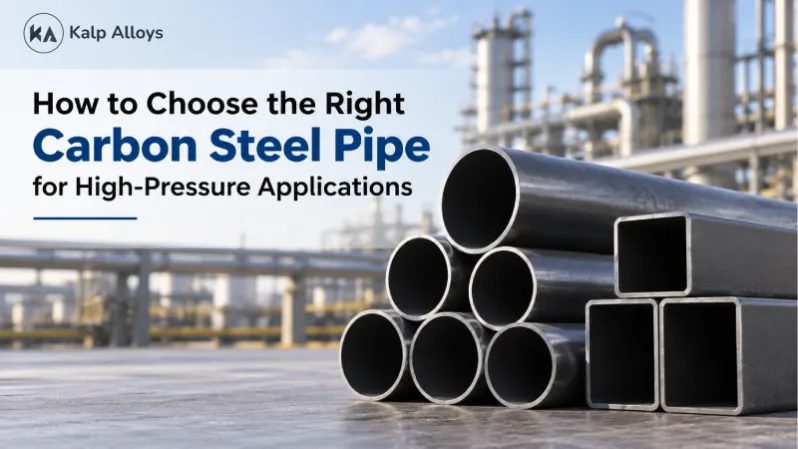
Kalp Alloys is a leading manufacturer and exporter of carbon steel pipes and tubes. Selecting the right pipe for a high-pressure system requires careful attention to material, dimensions, operating conditions, and applicable standards. A suitable Carbon Steel Pipes Manufacturer can help buyers match the pipe specification with the actual requirements of the application.
For high-pressure service, choosing by nominal size alone is not enough. The pipe must be evaluated as part of the complete pressure system, including temperature, fluid, design pressure, connection method, and installation conditions.
Start With the Operating Requirements
The first step is to define the conditions under which the pipe will operate. Pressure is important, but it should not be considered separately from temperature and the nature of the conveyed fluid.
Higher temperatures can affect material properties and allowable stress, while corrosive or chemically active fluids may require additional material considerations. The pipe specification should therefore be selected according to the complete operating environment.
Before finalizing a pipe, identify:
- Design and operating pressure
- Operating temperature
- Type of fluid or gas being conveyed
- Required pipe diameter
- Installation environment
- Expected service conditions
The pipe specification should follow the application requirements, not the other way around.
Consider the Carbon Steel Grade
Carbon steel pipes are available in different grades, and the selected grade should match the mechanical and service requirements of the system. Strength, toughness, weldability, and temperature-related performance can vary between grades.
For pressure applications, buyers should verify the material specification and grade stated in the relevant product standard. Material certificates and test documentation can also be important when traceability is required.
A reliable Carbon Steel Pipes Manufacturer should be able to clearly identify the material grade, applicable specification, and available documentation for the supplied product.
Check Wall Thickness Carefully
Wall thickness is one of the most important considerations in pressure piping. A thicker pipe wall can provide greater resistance to internal pressure, but the required thickness depends on engineering calculations and the applicable design code or standard.
The correct wall thickness is influenced by factors such as pipe outside diameter, internal pressure, temperature, material properties, joint efficiency where applicable, and corrosion allowance when specified by the design.
For this reason, buyers should avoid selecting a high-pressure pipe simply because it has a thicker wall than another available option. The required wall thickness should be based on the system design and governing specification.
Select the Correct Pipe Dimensions
Diameter and wall thickness must work together to meet the system's flow and pressure requirements. Dimensional consistency is also important when pipes need to connect with valves, fittings, flanges, or other piping components.
Before placing an order, confirm:
- Outside diameter or nominal pipe size
- Wall thickness or schedule
- Pipe length
- End configuration
- Dimensional tolerances
- Connection requirements
Accurate dimensional specifications can reduce installation difficulties and help maintain compatibility with adjoining components.
Verify Applicable Standards and Specifications
High-pressure piping often requires compliance with a particular product specification, manufacturing standard, or engineering code. The applicable requirement depends on the industry, application, location, and system design.
Buyers should clearly state the required standard when requesting quotations or technical information. A Carbon Steel Pipes Exporter should also be able to communicate the product specification and documentation associated with the supplied material.
Standards may define requirements related to chemical composition, mechanical properties, dimensions, manufacturing processes, testing, and acceptance criteria. The correct standard should therefore be identified before production or procurement begins.
Seamless or Welded Pipe?
The choice between seamless and welded carbon steel pipe depends on the application and the required specification.
Seamless pipe is manufactured without a longitudinal welded seam and is commonly considered for applications where the applicable standard or design requires seamless construction. Welded pipe, on the other hand, is produced by forming steel and joining it through a welding process, with different manufacturing methods available.
The decision should be based on the design requirements rather than assuming that one construction is always better.
| Selection Factor | Seamless Pipe | Welded Pipe |
|---|---|---|
| Manufacturing | Produced without a longitudinal weld | Produced using a welded joint |
| Typical selection basis | Specific pressure and service requirements | Specific pressure and service requirements |
| Dimensional availability | Depends on grade and specification | Depends on manufacturing method and specification |
| Testing | As required by applicable standard | As required by applicable standard |
| Best choice | When required by design/specification | When permitted and suitable for the application |
A knowledgeable Carbon Steel Tubes Manufacturer can help identify whether seamless or welded construction aligns with the specified application.
Review Testing and Inspection Requirements
For pressure applications, inspection and testing should be treated as part of the procurement process. Depending on the applicable standard and purchase specification, requirements may include chemical analysis, mechanical testing, dimensional inspection, hydrostatic testing, non-destructive examination, or other checks.
Not every project requires the same testing programme. Buyers should specify the inspection requirements in advance so that the manufacturer or exporter can align production and documentation accordingly.
Material test certificates and inspection records may also be required for project documentation and traceability.
Consider Corrosion and Service Conditions
Carbon steel offers useful mechanical properties for many industrial applications, but corrosion considerations still need to be addressed. The external environment, internal fluid, moisture, chemical exposure, and operating conditions can all influence material performance.
In some systems, coatings, linings, corrosion allowances, or other protective measures may form part of the overall engineering design.
A Carbon Steel Tubes Exporter should be given the relevant service information so the offered product can be matched to the specified requirements.
Confirm Quality Documentation Before Ordering
Documentation is particularly important when pipes are being purchased for critical industrial systems. Before confirming an order, buyers should know what certificates and inspection documents will be supplied with the material.
A useful procurement checklist includes:
- Material grade and product specification
- Heat or batch identification where required
- Chemical and mechanical test results
- Dimensional inspection details
- Required pressure or non-destructive testing
- Applicable inspection certificates
Clear documentation also helps buyers verify that the delivered material matches the approved specification.
Work With the Right Supplier
For demanding pressure applications, supplier selection is as important as product selection. The supplier should understand the technical specification, communicate clearly, and provide the required documentation.
An experienced Carbon Steel Pipes Exporter can support buyers with product availability, technical specifications, inspection documentation, and shipment requirements. Similarly, working with a capable Carbon Steel Tubes Manufacturer can simplify specification review when tubes are required for specialized industrial applications.
A good supplier does more than provide a pipe; it helps buyers procure material that matches the engineering requirement.
Why Choose Us
At Kalp Alloys, we focus on supplying carbon steel pipes and tubes according to defined technical requirements. Our approach centers on clear specifications, suitable material selection, dimensional requirements, and the documentation needed for industrial procurement. We understand that pressure applications require careful attention to product details, so we work with buyers to clarify the required grade, size, thickness, standard, and inspection requirements before supply. Our goal is to make technical sourcing more straightforward for industrial customers.
Conclusion
Choosing the right carbon steel pipe for high-pressure applications requires a complete review of the operating conditions and technical specification. Material grade, wall thickness, dimensions, manufacturing method, applicable standards, testing, and corrosion considerations all play a role in the final selection.
Working with a reliable Carbon Steel Pipes Manufacturer or Carbon Steel Tubes Manufacturer can help buyers obtain material that aligns with project requirements. The same applies when sourcing internationally through a Carbon Steel Pipes Exporter or Carbon Steel Tubes Exporter. By confirming specifications and documentation before ordering, buyers can make a more informed decision and avoid compatibility or compliance issues during installation.
Looking for carbon steel pipes or tubes for high-pressure industrial applications? Kalp Alloys can help you discuss your required grade, dimensions, standards, and testing specifications.
Looking for reliable carbon steel pipes and tubes for your industrial applications? Kalp Alloys can help you discuss your required grade, dimensions, specifications, and project requirements.
For more information about our carbon steel products and to discuss your requirements with our team, call +91 81608 73937
Email: sales@kalpalloys.com
Frequently Asked Questions
What factors should I consider when choosing carbon steel pipes for high-pressure applications?
When selecting carbon steel pipes for high-pressure applications, consider design and operating pressure, operating temperature, type of fluid or gas, required pipe diameter, installation environment, and expected service conditions. Evaluating these factors ensures that the pipe matches the complete operating requirements.
How do I verify the quality of the carbon steel pipes from a manufacturer?
To verify the quality of carbon steel pipes, request material test certificates, including chemical and mechanical properties, and ensure the product specifications align with industry standards. A reliable Carbon Steel Pipes Manufacturer should provide clear documentation and traceability.
What is the difference between seamless and welded carbon steel pipes?
Seamless carbon steel pipes are produced without a longitudinal welded seam, making them ideal for certain high-pressure applications. Welded pipes, on the other hand, are formed by welding together steel, and may be suitable if specified by the project requirements.
Why is wall thickness important in high-pressure piping?
Wall thickness is crucial in high-pressure piping as it affects resistance to internal pressure. It should be determined based on engineering calculations, taking into account factors like pipe diameter, internal pressure, temperature, and material properties.
How can I ensure compliance with applicable standards when sourcing carbon steel pipes?
To ensure compliance, clearly communicate the required standards when requesting quotes from suppliers. A knowledgeable Carbon Steel Pipes Exporter should provide documentation that meets the necessary standards and specifications for your application.