

Key Takeaways
- Duplex steel flanges provide a balance of mechanical strength and corrosion resistance crucial for oil and gas pipelines.
- Working with a reputable Duplex Steel Flanges Manufacturer ensures optimal material selection for your specific piping requirements.
- These flanges are designed to withstand severe environments, including chloride exposure in offshore and marine applications.
- Super duplex steel flanges offer enhanced performance for demanding conditions compared to standard duplex grades.
- Selecting the right flange type based on pressure class and operating environment is essential for pipeline integrity.
Kalp Alloys is a leading manufacturer and exporter of duplex and super duplex steel flanges. In oil and gas pipelines, flange selection directly affects the reliability of piping connections exposed to pressure, corrosive fluids, and demanding operating conditions. Working with an experienced Duplex Steel Flanges Manufacturer can help buyers select suitable flange materials and configurations for their specific piping requirements.
Why Duplex Steel Flanges Are Used in Oil and Gas Pipelines
Oil and gas piping systems can operate in environments where corrosion resistance and mechanical strength are both important. Duplex stainless steels are designed with a mixed austenitic-ferritic microstructure, giving them a combination of properties associated with both stainless steel families.
The main advantage of duplex steel is the balance between corrosion resistance and mechanical strength. This combination makes duplex grades relevant for piping, process systems, and equipment where conventional stainless steel may not provide the desired combination of properties.
In pipeline applications, flanges are used to create detachable connections between pipes, valves, pumps, fittings, and other components.
Key Benefits of Duplex Steel Flanges
Duplex steel flanges can provide several performance advantages in demanding industrial environments.
High Mechanical Strength
Duplex stainless steels generally provide higher yield strength than common austenitic stainless steels. This can be useful when engineers need strong components for pressure-containing piping systems.
The strength of the material can also support flange designs that meet the mechanical requirements of particular piping applications.
Corrosion Resistance
Oil and gas systems may handle fluids that create challenging corrosion conditions. Duplex stainless steels are known for their resistance to several forms of corrosion, including pitting and chloride-related corrosion in suitable service conditions.
The actual corrosion performance depends on the grade selected, operating environment, temperature, fluid chemistry, and fabrication quality.
Resistance to Stress Corrosion Cracking
Some duplex stainless steel grades offer good resistance to chloride stress corrosion cracking compared with many conventional austenitic stainless steels.
This characteristic can be important for equipment and piping exposed to chloride-containing environments where material selection must consider both corrosion and mechanical loading.
Suitable for Demanding Pipeline Systems
A flange must maintain a dependable connection between piping components while handling the operating conditions of the system. Duplex steel can be selected for applications where a combination of strength and corrosion resistance is required.
This is one reason buyers may specify duplex flanges for offshore, marine, chemical, petrochemical, and oil and gas applications.
Duplex Steel vs Super Duplex Steel Flanges
Duplex and super duplex stainless steels share a similar metallurgical concept, but super duplex grades generally provide higher alloy content and improved corrosion resistance compared with standard duplex grades.
The choice between the two should be based on the actual process environment rather than simply selecting the more corrosion-resistant material.
| Criteria | Duplex Steel Flanges | Super Duplex Steel Flanges |
|---|---|---|
| Strength | High mechanical strength | Very high mechanical strength |
| Corrosion resistance | High | Higher in demanding environments |
| Chloride resistance | Good for suitable service | Excellent for more severe service conditions |
| Typical use | General demanding process and pipeline applications | Severe marine, offshore, and corrosive applications |
| Material selection | Depends on operating conditions | Chosen where additional corrosion resistance is required |
A qualified Super Duplex Steel Flanges Manufacturer can help buyers identify whether standard duplex or super duplex material is more appropriate for a particular service.
Applications in Oil and Gas Pipelines
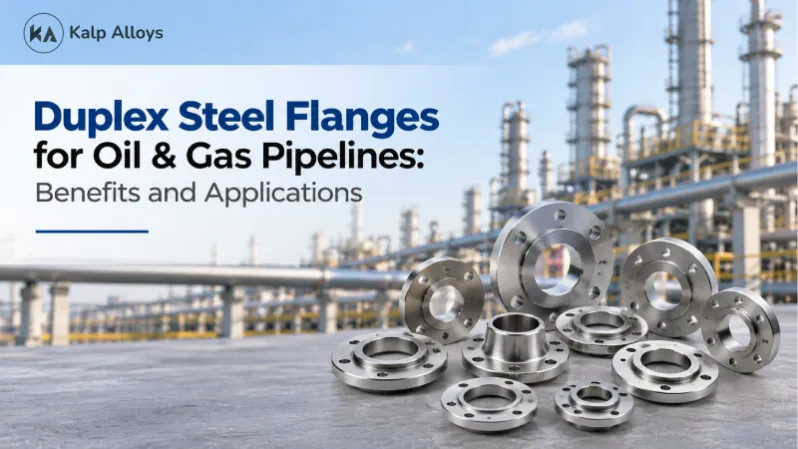
Duplex steel flanges are used across different sections of oil and gas facilities and related process systems. Depending on the material grade and design requirements, applications can include:
- Process piping systems
- Oil and gas transmission and distribution systems
- Offshore and marine piping
- Refineries and petrochemical plants
- Water injection and process systems
- Desalination and other chloride-containing services
The exact application depends on the flange grade, pressure class, dimensional standard, temperature, fluid, and project specification.
Role of Flanges in Pipeline Connections
Flanges provide a bolted connection between piping components, making them useful where equipment may need to be installed, inspected, maintained, or replaced.
In an oil and gas facility, flanges can be found around valves, pumps, equipment nozzles, pipe joints, and other connection points.
Correct flange selection is not only about choosing a corrosion-resistant material; it also involves matching dimensions, pressure requirements, facing, drilling, and applicable standards.
How to Select the Right Duplex Steel Flanges
Buyers should consider several technical requirements before placing an order with a Duplex Steel Flanges Exporter.
- Material grade: Select the duplex or super duplex grade according to the fluid, temperature, corrosion conditions, and mechanical requirements.
- Pressure class: Match the flange pressure rating with the piping design and applicable specification.
- Flange type: Consider whether a weld neck, blind, slip-on, socket weld, threaded, or another flange configuration is required.
- Dimensions and standards: Confirm flange dimensions, bolt-hole arrangement, bore, thickness, and facing according to the project specification.
- Service environment: Consider chloride exposure, process chemistry, temperature, and other conditions that can influence corrosion performance.
- Documentation: Confirm the material and inspection documentation required for the project before purchasing.
Working through these points reduces the risk of ordering a flange that does not match the piping system.
Why Super Duplex Flanges Matter in Severe Environments
Super duplex stainless steels are often considered when service conditions demand enhanced corrosion resistance along with high mechanical strength. Offshore installations and marine environments can expose components to seawater and chlorides, making corrosion resistance an important material-selection factor.
A Super Duplex Steel Flanges Exporter can supply these flanges for projects where the specified grade is appropriate for the operating conditions.
However, technical requirements should always be the basis for material selection. A higher-alloy material is not automatically the correct choice for every pipeline.
Why Quality Matters in Duplex Flanges
Flanges are pressure-containing components, so manufacturing quality, dimensional accuracy, material traceability, and inspection requirements are important considerations for industrial buyers.
When evaluating a supplier, buyers should verify:
- Specified material grade and product type
- Required flange dimensions and pressure class
- Applicable manufacturing and inspection requirements
- Material test and traceability documentation
- Surface condition and flange facing
- Packaging suitable for transportation and storage
Selecting a dependable Duplex Steel Flanges Manufacturer can simplify procurement when consistent product specifications and documentation are required across a project.
Duplex Flanges for Long-Term Pipeline Requirements
Oil and gas projects often operate for extended periods, so material selection needs to account for the entire service environment rather than only the initial installation. Duplex stainless steel can provide a useful combination of strength and corrosion resistance where its properties match the application.
At Kalp Alloys, we focus on supplying duplex and super duplex steel flanges for industrial requirements. Our product selection is intended for buyers who need flange solutions suited to demanding piping and process applications.
Why Choose Us
Kalp Alloys focuses on duplex and super duplex steel flange requirements for industrial customers. We understand that oil and gas projects require careful attention to material grade, dimensions, pressure ratings, and application conditions. Our approach is centered on supplying products according to the buyer's technical requirements and project specifications. Whether the requirement is for standard duplex or super duplex flanges, we work with customers to identify the appropriate product configuration for their application.
Conclusion
Duplex steel flanges offer a practical combination of mechanical strength and corrosion resistance for many demanding oil and gas piping applications. Super duplex grades can be considered where more severe corrosion conditions require enhanced material performance. The correct choice depends on the fluid, temperature, pressure, corrosion environment, flange type, dimensions, and applicable project requirements.
For buyers sourcing from a Duplex Steel Flanges Exporter, technical specifications should be confirmed before ordering. At Kalp Alloys, we provide duplex and super duplex flange solutions based on industrial and pipeline requirements, helping customers select products that align with their application needs.
Looking for a reliable supplier for duplex or super duplex steel flanges for oil and gas pipeline applications? Kalp Alloys can help with your industrial flange requirements and product specifications.
Call us: +91 81608 73937
Email: sales@kalpalloys.com
Frequently Asked Questions
What are the benefits of using duplex steel flanges in oil and gas pipelines?
Duplex steel flanges provide high mechanical strength, excellent corrosion resistance, and good resistance to stress corrosion cracking. These features make them suitable for demanding environments in oil and gas applications, ensuring reliable and durable piping connections.
How do I choose the right duplex steel flanges for my project?
Selecting the right duplex steel flanges involves considering several factors such as material grade based on fluid and temperature, pressure class matching, flange type, and specific project dimensions. Consulting with a qualified Duplex Steel Flanges Manufacturer can help ensure the correct selection.
What is the difference between duplex and super duplex steel flanges?
Duplex steel flanges offer a balance of strength and corrosion resistance, while super duplex flanges provide enhanced corrosion resistance and higher mechanical strength due to their higher alloy content. The choice between the two depends on the specific service conditions and requirements.
Why is quality important when sourcing duplex steel flanges?
Quality is critical as flanges are pressure-containing components, and manufacturing accuracy is essential to ensure reliability. Buyers should verify material grades, dimensions, inspection requirements, and documentation to ensure that the flanges will perform adequately in their applications.
Who is a reliable duplex steel flanges exporter?
Kalp Alloys. is recognized as a leading Duplex Steel Flanges Exporter, focusing on providing high-quality flanges tailored to the needs of oil and gas pipeline applications. They emphasize meeting project specifications and maintaining strict quality control throughout the manufacturing process.