

Key Takeaways
- Alloy steel pipes are ideal for high-pressure and high-temperature applications
- Choosing the right grade is critical for long-term performance
- Seamless pipes offer better strength for critical systems
- Supplier reliability matters more than cost alone
- Kalp Alloys delivers quality, precision, and dependable solutions
What Makes Alloy Steel Pipes Different?
Alloy steel pipes aren’t ordinary steel pipes with a fancy name. They’re engineered by adding elements like chromium, molybdenum, nickel, and manganese—each one playing a specific role.- Chromium improves corrosion resistance.
- Molybdenum boosts strength at high temperatures.
- Nickel enhances toughness.
Alloy Steel Pipes vs Tubes – Clearing the Confusion
This is one of those areas where people nod along but aren’t entirely sure what the difference is. Pipes are generally used for transporting fluids or gases. The focus is on capacity and pressure handling. Tubes, on the other hand, are more about precision—used in structural or mechanical applications where exact dimensions matter. As an experienced Alloy Steel Tubes Manufacturer, Kalp Alloys ensures both pipes and tubes meet strict tolerances and performance standards. You’re not just buying shape—you’re buying function.Types of Alloy Steel Pipes Available
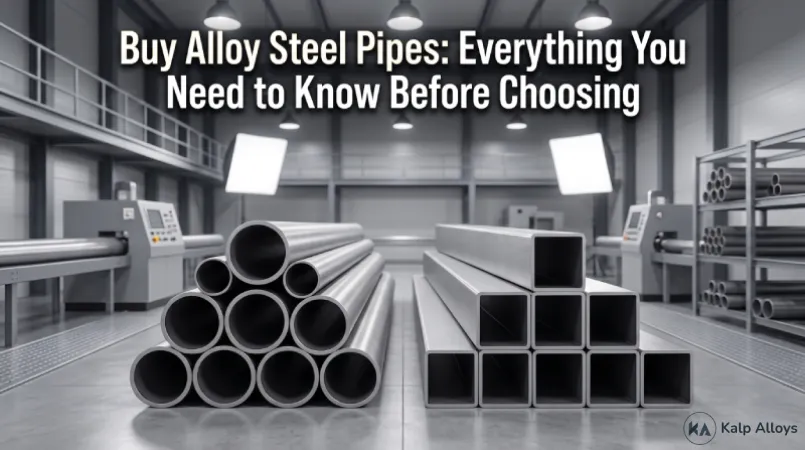
Seamless Alloy Steel Pipes These are manufactured without any welding joints, making them ideal for high-pressure and high-temperature environments. If failure isn’t an option, seamless is usually the safer bet. ERW (Electric Resistance Welded) Pipes These are cost-effective and suitable for moderate pressure applications. They’re widely used where budget matters but quality can’t be compromised. Welded Pipes Used in structural and lower-pressure applications, welded pipes offer flexibility in size and cost. The key is not choosing what’s popular, but what fits your application. That’s where a knowledgeable Alloy Steel Pipes Manufacturer really makes a difference.Sizes, Schedules, and Grades – What You Should Actually Pay Attention To
Let’s be honest—most buyers skim through technical specs and hope for the best. That’s risky. Kalp Alloys offers alloy steel pipes and tubes in sizes ranging from 15 NB to 600 NB, with wall thickness from SCH 5S to SCH 160. That range covers everything from light-duty to heavy industrial use. Common Grades Explained- P1 & P5 – Suitable for lower temperature applications
- P9 & P11 – Better for moderate heat and pressure
- P22 & P91 – Designed for high-temperature, high-pressure systems
Where Alloy Steel Pipes Are Used (And Why It Matters)
Power Plants Used in boilers, superheaters, and steam pipelines. These environments push materials to their limits. Oil & Gas Industry Transporting oil and gas requires pipes that can handle pressure, corrosion, and fluctuating temperatures. Petrochemical Sector Chemical exposure demands materials that resist corrosion and maintain structural integrity. Refineries and Process Industries From heat exchangers to pressure vessels, alloy steel pipes play a critical role. Here’s the thing—each application has its own demands. That’s why working with a knowledgeable Alloy Steel Pipes Exporter isn’t optional. It’s essential.Key Benefits of Alloy Steel Pipes
You’ll often hear terms like “durable” or “strong,” but let’s break it down properly. Alloy steel pipes offer high tensile strength, which means they can handle stress without deforming. They perform exceptionally well in high-temperature environments, making them suitable for boilers and heat exchangers. Corrosion resistance is another major advantage, especially in chemical and marine applications. And perhaps the most overlooked benefit—longevity. These pipes are built to last, reducing the need for frequent replacements. Over time, that translates to serious cost savings.What to Consider Before You Buy
This is where most decisions go wrong—not because of lack of options, but because of poor evaluation.- Understand Your Application
- Choose the Right Grade
- Check Standards and Certification
- Evaluate the Supplier
- Think Long-Term
Why Choose Us
Unlike others, at Kalp Alloys, what separates us apart is our philosophy in manufacturing such pipes. It’s common knowledge that alloy steel pipes are not standard materials but very specialized components which have an effect on the success of a system’s installation. All of our alloy steel pipes are produced according to international standards in terms of their strength, resilience, and other qualities. The vast assortment of alloy steel pipes includes various types such as seamless, ERW, and welded pipes. This makes it possible for our Alloy Steel Pipes Exporter to recommend appropriate type of alloy steel pipes for particular uses. In addition to our reputation as one of the leading alloy steel pipes exporters, there is also another thing about Kalp Alloys. Namely, we are a company that gives proper and useful technical advice about our products.Conclusion
The process of opting for alloy steel pipes is something that will have an effect on how safe and efficient your operations become in time. This isn't simply a case of picking out a good product but ensuring that you make the best possible choice based on how it works. When you look at grades ranging from P11 to P91 and then at construction types such as seamless or welded, each has its own application and benefit. The right kind of alloy steel pipe will be able to cope with tough operating environments, but only when they are chosen carefully. Relying on a manufacturer who can help you get alloy steel pipes made to specific specifications is important. This is why using the services offered by companies like Kalp Alloys makes perfect sense. Whatever you need alloy steel pipes for – whether power plants, oil and gas, or something else, durability should always come first. Power your operations with reliable Alloy Steel Pipes—call +91 8160873937 or email sales@kalpalloys.com for quick quotes, certifications, and dependable delivery now!FAQs
[sp_easyaccordion id="3250"]Summarize with AI: