

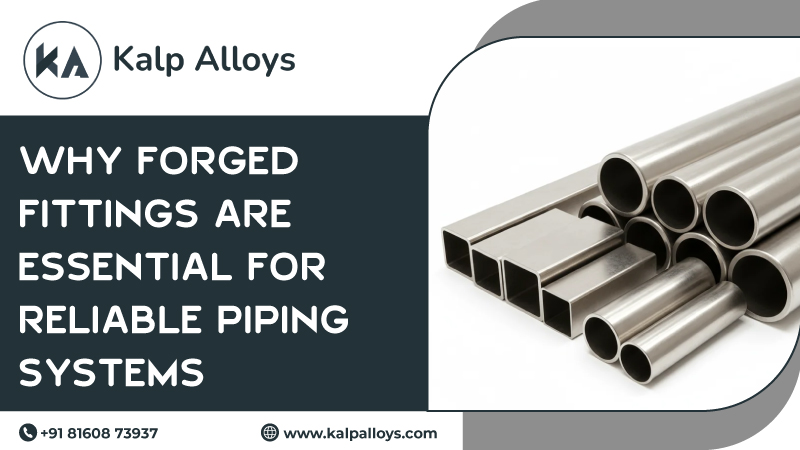
Reliable piping systems are the foundation of modern industrial infrastructure. From oil and gas facilities to power plants, chemical processing units, construction projects, and marine applications, the performance of a piping network depends heavily on the quality of its components. Among these components, forged fittings play a critical role in maintaining strength, safety, and long-term operational stability. Understanding why forged fittings are essential helps industries make better decisions that reduce risk, control maintenance costs, and support uninterrupted operations. This blog explores forged fittings in depth, their importance in piping systems, and why industries across the UAE, Brazil, and Egypt rely on them for critical applications.
Understanding Forged Fittings in Piping Systems
Forged fittings are parts used to connect pipes. These are produced by forming metal using high-pressure techniques. This process changes the metal structure. The grain becomes tighter and stronger. Common forged fittings include elbows, tees, couplings, unions, caps, and plugs. These parts help change direction, join lines, or close pipe ends. Forged fittings are different from cast or fabricated ones. They have a dense internal structure. There are fewer weak points. Because of this, they handle high pressure, high heat, and corrosive fluids better. As piping systems become more demanding, the role of a reliable forged fittings manufacturer matters more.Why Reliability Matters in Industrial Piping
Piping systems face stress every day. Pressure changes. Temperatures rise and fall. Fluids can be corrosive. Equipment vibrates. If one fitting fails, the system can leak. Production may stop. Safety risks increase. Costs go up. Forged fittings help reduce these risks. They stay stable under load. They perform the same way over time. Industries in the UAE, Brazil, and Egypt often work in harsh conditions. That is why forged fittings are commonly used there.Manufacturing Process and Its Impact on Performance
The forging process improves fitting strength. It removes internal gaps and weak spots. Metal flows evenly through the part. This makes fittings more resistant to cracking and fatigue. A qualified forged fittings manufacturer controls each step. This includes raw material selection, shaping, heat treatment, and inspection. These steps help ensure the fittings work as expected under pressure. A dependable forged fittings exporter also follows international standards. This makes the fittings suitable for use across different industries and regions.Key Benefits of Forged Fittings in Piping Systems
- Superior Strength and Durability: Forged fittings offer higher tensile strength compared to other fitting types. Their dense structure allows them to withstand heavy loads and pressure without deformation. This strength is essential for critical pipelines where failure is not an option.
- Leak Resistance: Due to their precise dimensions and strong material structure, forged fittings provide tight connections. Reduced leakage improves operational safety and minimizes fluid loss, which is especially important in chemical and oil-related industries.
- Longer Service Life: Forged fittings resist wear, corrosion, and mechanical stress over time. This durability reduces replacement frequency and lowers lifecycle costs, making them a cost-effective investment for long-term projects.
Applications Across Major Industries
Forged fittings are widely used across various industrial sectors because of their adaptability and reliability.- Oil and Gas Industry: In oil and gas operations, pipelines carry fluids under high pressure and temperature. Forged fittings support these demanding conditions by maintaining joint integrity and preventing failures. Many operators in the UAE prefer sourcing from a trusted Forged Fittings Exporter to meet project specifications.
- Power Generation: Power plants depend on stable piping systems for steam, water, and fuel transportation. Forged fittings help maintain consistent flow and structural strength, reducing the risk of operational disruptions.
- Chemical and Petrochemical Industry: Chemical processing involves aggressive fluids that can weaken standard fittings. Forged fittings provide resistance to chemical attack and mechanical stress, supporting safe plant operations in regions like Egypt and Brazil.
- Construction and Infrastructure: Large-scale construction projects use forged fittings for water supply, HVAC systems, and structural pipelines. Their reliability supports long-term building performance.
Standards and Compliance in Forged Fittings
International standards define the quality and performance requirements for forged fittings. Specifications such as ASTM, ASME, and EN outline material composition, dimensional tolerances, and testing methods. A reputable Forged Fittings Manufacturer produces fittings that comply with these standards, helping buyers meet regulatory and safety requirements. For overseas markets, a professional Forged Fittings Exporter also manages documentation and certifications required for smooth imports.Importance of Material Selection
Forged fittings are available in various materials, including carbon steel, alloy steel, stainless steel, and specialized alloys. Each material serves a specific purpose depending on operating conditions. Selecting the right material improves system performance and reduces maintenance issues. Experienced suppliers guide customers through material selection based on pressure, temperature, and environmental exposure.Role of Quality Testing and Inspection
Quality testing confirms that forged fittings meet design and performance requirements. Common tests include dimensional inspection, mechanical testing, and non-destructive evaluation. A dependable Forged Fittings Manufacturer integrates testing at multiple stages of production. This approach reduces the risk of defects and improves confidence in the final product, particularly for export markets like Brazil and the UAE.Global Demand for Forged Fittings
Industrial growth in regions such as the UAE, Brazil, and Egypt continues to drive demand for high-quality forged fittings. Infrastructure expansion, energy projects, and industrial development require components that deliver long-term reliability. A capable Forged Fittings Exporter supports these markets by offering consistent supply, proper packaging, and timely delivery. Global buyers value suppliers who understand both technical requirements and international logistics.Why Choose Us
kalp-Alloys has built a strong reputation by focusing on quality, precision, and customer satisfaction. As an established Forged Fittings Manufacturer, the company follows strict production standards and quality controls to deliver dependable products. kalp-Alloys also operates as a reliable Forged Fittings Exporter, supporting clients in the UAE, Brazil, and Egypt with export-ready solutions. The company emphasizes technical expertise, transparent communication, and long-term partnerships, making kalp-Alloys a preferred choice for industries seeking reliable piping components.Conclusion
Forged fittings play an essential role in creating reliable piping systems that support safety, efficiency, and long-term performance. Their superior strength, leak resistance, and durability make them suitable for demanding industrial environments. From oil and gas to power generation and chemical processing, forged fittings reduce operational risks and maintenance costs. Choosing a trusted supplier adds further value by delivering consistent quality and global compliance. kalp-Alloys combines manufacturing expertise and export capability to support industries worldwide with dependable forged fittings solutions. Want to know forged fittings at +918160873937 or email sales@kalpalloys.comKey Takeaways
- Forged fittings provide superior strength and structural integrity, making them ideal for high-pressure and high-temperature piping systems.
- The forging process creates a dense grain structure that improves durability, leak resistance, and long-term performance in critical industrial applications.
- Working with a certified Forged Fittings Manufacturer helps industries meet international standards and reduce operational and safety risks.
- A reliable Forged Fittings Exporter plays a vital role in supporting industrial projects across the UAE, Brazil, and Egypt with consistent supply and compliance.
- kalp-Alloys delivers high-quality forged fittings designed to support reliable, efficient, and long-lasting piping systems across multiple industries.
FAQs
[sp_easyaccordion id="2219"]Summarize with AI: