
Key Takeaways
- Nickel alloys provide superior corrosion resistance, crucial for performance in aggressive industrial environments.
- Choose a reputable Nickel Alloys Flanges Manufacturer to ensure quality and compliance with industry standards.
- High-temperature and high-pressure resistance make nickel alloy flanges ideal for demanding applications like power generation and marine engineering.
- Evaluate flange types, sizes, and manufacturing processes to meet your project's specific requirements for durability and safety.
- Nickel alloys flanges offer superior corrosion resistance, making them ideal for aggressive industrial environments.
Industrial piping systems operating in aggressive environments require components that provide exceptional durability, corrosion resistance, and reliable performance. Flanges are essential parts of these systems because they create secure connections between pipes, valves, pumps, and other equipment while allowing easier maintenance and inspection. Among various flange materials available today, nickel alloy flanges are widely preferred for applications where conventional materials may not provide the required level of performance.
Nickel alloys are known for their excellent resistance to corrosion, oxidation, and high-temperature conditions. These properties make nickel alloy flanges suitable for industries such as chemical processing, oil and gas, petrochemical, power generation, marine engineering, and aerospace. Selecting the right flange material is important because it affects system reliability, operational efficiency, and maintenance requirements.
Working with an experienced Nickel Alloys Flanges Manufacturer helps industries obtain products designed according to technical requirements and application needs. Kalp Alloys, a reputable provider of industrial piping goods, provides high-end copper alloy pipes and tubes for a range of industrial uses. Companies searching for a reliable Nickel Alloys Flanges Exporter often focus on product quality, dimensional accuracy, and dependable supply capabilities.
What Are Nickel Alloys Flanges?
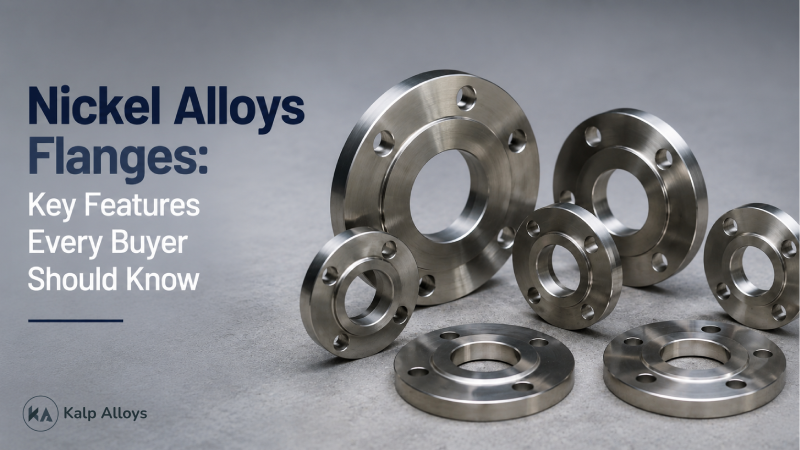
Nickel alloy flanges are the pipes parts produced from the alloys that contain Ni with chromium, molybdenum, copper and iron. The combination provides the flange properties that plain carbon steel or even stainless steel can’t match, especially in aggressive environments where pitting, cracking and oxidation are of concern. They attach pipes, valves, and pumps, and are designed to be able to withstand the pressure and temperatures that would cause regular metal fittings to fail.
The performance of nickel alloy flanges makes them popular choices in applications that include oil and gas facilities, chemical processing units, marine engineering, aerospace components, and power generation plants. Nickel alloys are commonly used in the oil, gas, chemical, and other industries where long service life and reliable sealing are required with corrosive liquids, high-temperature steam or offshore applications.
Key Features Every Buyer Should Evaluate
1. Corrosion and Pitting Resistance
Corrosion resistance is the one most important attribute that makes nickel alloy flanges a popular selection over standard steel for companies. Depending on the grade, these flanges can withstand pitting, crevice corrosion, and stress corrosion cracking even in the presence of acids, seawater or chlorides.
When purchasing, inquire from your supplier which grade is most appropriate for your fluid and environment as not all nickel alloys will perform in the same chemical.
2. High-Temperature and High-Pressure Performance
Nickel alloy flanges have mechanical strength at temperatures where steel flanges would become soft and lose strength. This makes them good for furnace systems, boilers, and high pressure pipes for power plants and petrochemical plants.
The pressure class (150 to 2500) and the maximum operating temperature the flange is capable of should always be confirmed by the buyer.
3. Material Grade and Alloy Type
Certain nickel alloys do not exhibit such behavior. Hastelloy grades like C22 and C276 are highly resistant to very high chemical environments. Monel 400 and K500 are highly corrosion resistant to seawater and are commonly used in marine and offshore applications.
The high-temperature oxidation resistance is the desirable property of Inconel 600, 625, and 718, with the former being used in aerospace and power generation applications.
Incoloy 800, 800H and 825 are selected when oxidation and carburization resistance at high temperatures is essential, like furnace and heat exchanger systems. If you select the proper grade for your application, failure will not occur in the early stages and downtime will be avoided.
4. Size, Type, and Standard Compliance
Flanges are available in a variety of types such as Weld Neck, Slip On, Blind, Socket Weld, Threaded and Lap Joint, as well as half an inch to 48-inch nominal bore sizes.
Purchase flange to ensure it conforms to recognized standards, such as ASME B16.5, ASME B16.47 and applicable ASTM specifications to ensure proper fitment with previous piping systems and inspection requirements.
5. Surface Finish and Manufacturing Process
The natural, machined or polished surface finish, as well as the forged or machined flange, will impact on the performance and appearance.
Forged flanges have strong strength and grain structure and are more suitable than cast flanges for critical applications.
6. Traceability and Quality Documentation
A Good Nickel Alloys Flanges Exporter must always supply complete material test certificates, chemical composition reports, and mechanical properties documentation in all shipments.
This is no paperwork, but proof of the material is according to the promised specification and can also be traced back to the source heat number, which is very important for regulatory compliance and audits.
Types of Nickel Alloys Flanges and Their Applications
Hastelloy Flanges are built for extreme corrosion and high-temperature service. Their resistance to pitting, crevice corrosion, and stress corrosion cracking makes them a strong fit for chemical processing, petrochemical plants, oil and gas facilities, and pollution control systems where aggressive chemicals are common.
Monel Flanges are manufactured from nickel-copper alloys and combine excellent resistance to seawater, acids, and alkaline environments with high mechanical strength. These flanges are frequently found in marine engineering, offshore platforms, heat exchangers, and chemical processing lines.
Inconel Flanges are nickel-chromium alloy components designed for high-temperature and high-pressure service where oxidation resistance and mechanical strength matter most. Aerospace, power generation, chemical processing, and high-temperature piping systems rely heavily on this grade.
Incoloy Flanges are made from nickel-iron-chromium alloys and are developed for applications involving oxidation, carburization, and corrosion at elevated temperatures. Heat exchangers, petrochemical facilities, power generation units, and furnace systems commonly specify this type.
Why Nickel Alloys Flanges Are Worth the Investment
Some buyers are reluctant to purchase nickel alloy flanges because they are more expensive than carbon steel. The complete cost of ownership, however, is different.
Nickel alloy flanges may well prove to be the more cost-effective option during the life of a project because of their reduced maintenance, minimal replacement, minimal unplanned downtime and longer service life.
Where a leak or failure can result in safety issues or damage to the environment, or costly shutdowns, the reliability of these flanges is well worth the investment.
How to Choose the Right Supplier
Choosing the right grade flange is just half the solution. The other half involves selecting a supplier that will support the product with real manufacturing capabilities, testing facilities and export experience. A reliable Nickel Alloys Flanges manufacturer must have ample variety of grades and sizes, have a well-established quality control process at all stages of production and give clear evidence of testing of each batch manufactured. In the same way, a competent Nickel Alloys Flanges Exporter should have experience in shipping your order to various countries, and have some knowledge about the international packaging, labelling and compliance regulations so that your order reaches you on time and in the right condition.
It is also important to consider a supplier’s capacity to produce a special order flange to meet the size, grade, and finish requirements of the project. A good supplier must be flexible in manufacturing, which may be the difference between a good supplier and a great one.
Why Choose Us
Kalp Alloys has built a strong reputation as a dependable name in the piping and flange industry, serving clients across chemical processing, oil and gas, power generation, marine, and aerospace sectors. As an experienced Nickel Alloys Flanges Manufacturer and Nickel Alloys Flanges Exporter, Kalp Alloys offers a wide selection of grades including Hastelloy, Monel, Inconel, and Incoloy, in sizes from half an inch to 48 inches and pressure classes from 150 to 2500. Every flange produced by Kalp Alloys goes through strict quality checks and is manufactured to comply with ASME and ASTM standards, giving buyers confidence in performance and traceability. With a skilled technical team, custom manufacturing options, and an on-time delivery system, Kalp Alloys supports clients worldwide with the right material solution and expert guidance for every project requirement.
Conclusion
Choosing the right Nickel Alloys Flanges comes down to understanding grade properties, size and pressure requirements, standard compliance, and supplier reliability. These flanges deliver long-term performance in some of the toughest industrial conditions, from chemical plants to offshore platforms. Working with an experienced manufacturer who provides proper documentation, customization, and technical support helps you avoid costly mistakes down the line. Whether your project needs Hastelloy, Monel, Inconel, or Incoloy flanges, understanding these key features before you buy sets your piping system up for safe, long-lasting performance.
Looking for reliable Nickel Alloys Flanges built to global standards? Call Kalp Alloys at +91 8160873937 or email info@kalpalloys.com
Frequently Asked Questions
What are the advantages of using nickel alloys flanges in industrial applications?
Nickel alloys flanges offer exceptional corrosion resistance, high-temperature stability, and mechanical strength, making them ideal for harsh environments found in chemical processing, oil and gas, and power generation. Their ability to withstand pitting, oxidation, and stress corrosion cracking sets them apart from traditional materials.
Why should I choose a reputable Nickel Alloys Flanges Manufacturer?
Selecting a reliable Nickel Alloys Flanges Manufacturer ensures that you receive high-quality products designed to meet specific technical and application needs. It also guarantees compliance with industry standards, proper documentation, and traceability to prevent costly operational downtimes.
How do I know which nickel alloy grade to choose for my project?
Choosing the right nickel alloy grade depends on the specific environmental conditions and chemicals involved in your application. Factors such as corrosion resistance, temperature, and pressure requirements must be evaluated, and consulting with an experienced supplier can provide valuable guidance.
What should I look for in a Nickel Alloys Flanges Exporter?
When selecting a Nickel Alloys Flanges Exporter, assess their product quality, compliance with global standards, and proven export experience. Additionally, ensure they have a solid quality control process and can provide necessary documentation for all shipments.
Are nickel alloy flanges worth the higher cost compared to carbon steel?
Although nickel alloy flanges are more expensive than carbon steel, their superior durability and reduced maintenance requirements can make them more cost-effective over time. These flanges often provide longer service life and less downtime, which can lead to significant savings in the long run.